Home › Guide
Is it dangerous to ride a scooter in Bangkok?
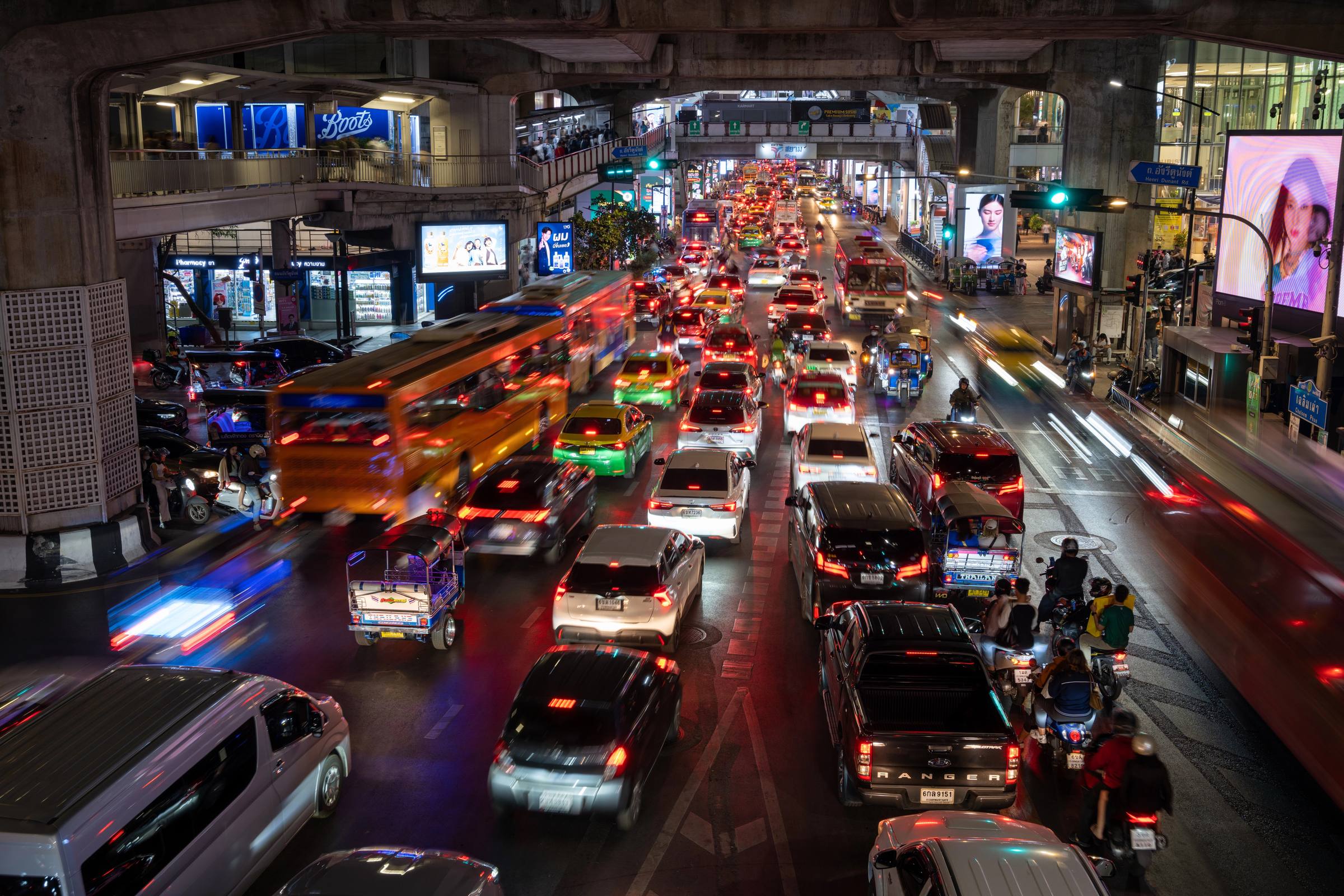
Short answer: less than you might think. Bangkok looks busy, but Thai drivers are some of the calmest and most considerate in the world. People rarely honk, almost nobody shouts, and cars make room for scooters. The serious accidents mostly happen to people without a helmet, after drinking, at high speed or on their very first scooter ride. Wear a helmet, carry the right licence, ride relaxed and skip the beer before riding, and Bangkok is a wonderful city to explore on two wheels.
Thai traffic: calm, patient and considerate
Thailand is a gentle country, and you notice that on the road too. Thais call it jai yen, a "cool heart": staying calm and not losing your temper. That is how most people drive.
- Hardly any honking. In Bangkok a horn is rare and usually just a friendly "I'm here".
- No road rage. If someone cuts in, people let it go. Shouting or aggressive gestures are very unusual.
- Room for scooters. Car drivers expect motorbikes everywhere and leave space for them. Scooters are part of everyday life here, not a nuisance.
- Flow instead of rules. Traffic works by everyone giving a little. Ride smoothly and predictably, smile, and you will fit right in.
Many of our customers tell us they feel more relaxed on a scooter in Bangkok than in traffic at home.
Who should ride, and who should not
- Good idea: you ride a scooter or motorbike at home, you are comfortable in dense traffic, and you have a motorbike licence.
- Think twice: you have never ridden a scooter before. Bangkok is not the place to learn. Practise somewhere quiet first, or use a Grab or Bolt motorbike taxi.
- Do not ride: after drinking, when you are very tired, or without a helmet.
What is different from home
- Traffic drives on the left. Keep to the left lane, and be extra careful at junctions and roundabouts if you are used to driving on the right.
- Many scooters, close together. Motorbikes filter between cars and gather at the front at red lights. Expect bikes to pass you on both sides.
- U-turns instead of left and right turns. On big roads you often turn by going to a U-turn point. Cars and bikes slow down suddenly there, so keep your distance.
- Motorbike taxis and delivery riders know every gap and move quickly. Just let them pass, there is no need to keep up.
- Pedestrians and street food stalls use the edge of the road. In small sois, ride slowly and watch for people, dogs and cars backing out.
- Expressways and tollways are closed to motorbikes, and some flyovers and underpasses are too. Follow the signs. Google Maps in motorbike mode avoids them.
Helmet and clothing
Rider and passenger must wear a helmet by law, and police fine riders without one. Close the strap every time, even for short trips. Every Bangkok Blazers rental comes with a helmet. Closed shoes and long trousers protect you much better than flip-flops and shorts if you fall.
Licence: the rule that matters most
You need a Thai motorbike licence, or your home motorbike licence together with an International Driving Permit (IDP) that covers motorbikes. A car licence is not enough. Police check licences regularly, especially in tourist areas, and fine riders without one. The bigger problem comes after an accident: without a valid licence, insurance can refuse to pay, and you are personally liable for all damage and medical bills.
Rain, heat and riding at night
- Rainy season is roughly May to October. Heavy showers come fast. The first minutes of rain make roads very slippery, especially on painted lines, metal covers and the smooth surface of petrol stations. Slow down, brake gently and stop under cover if it pours.
- Flooded streets can hide potholes. Avoid deep water.
- Heat: drink water, and take a break on long trips. Being tired makes you slower to react.
- At night more people drive after drinking and some bikes ride without lights. If you are new to Bangkok, keep your first rides to daylight.
Alcohol
Drinking and riding is the most common cause of serious motorbike crashes in Thailand. The legal limit is low, and police run breath tests, especially at night and during holidays such as Songkran and New Year. The safe rule is simple: if you drink, take a taxi and pick up the scooter the next day.
Police checkpoints
Checkpoints are normal in Bangkok. Stop, stay polite and show your licence, IDP and passport copy. Typical fines are for no helmet, no licence or riding in the wrong lane. Ask for an official ticket. Traffic fines are paid by the renter.
Insurance: what is covered
- Every registered scooter in Thailand has the compulsory insurance, called Por Ror Bor. It covers limited medical costs for injured people. It does not cover damage to the scooter or to other vehicles.
- Travel insurance usually covers motorbike accidents only if your policy includes riding a motorbike and you hold a valid licence for it. Check your policy before you ride.
- Damage to the rental scooter is covered by our damage protection, which is included in the price. You can read the details in our Terms & Conditions.
Our tips for your first ride
- Do a few slow rounds in the quiet sois around our shop on Sukhumvit 54 before you go into big traffic.
- Plan your route with Google Maps in motorbike mode, and keep the phone in the phone holder we include.
- Keep a bigger gap than you would at home, and always expect someone to cut in.
- Use your mirrors and look over your shoulder before changing lanes. Scooters come from everywhere.
- Save our number. If something goes wrong, call or message us on WhatsApp. Technical defects are always free.
Ready to discover Bangkok on two wheels?
Well-maintained Yamaha scooters from ฿350 per day, with helmet, phone holder and damage protection included. You keep your passport.
Check availability & bookThis guide is general information from our experience as a rental shop, not legal advice. Rules can change, so check the current rules if you are unsure.